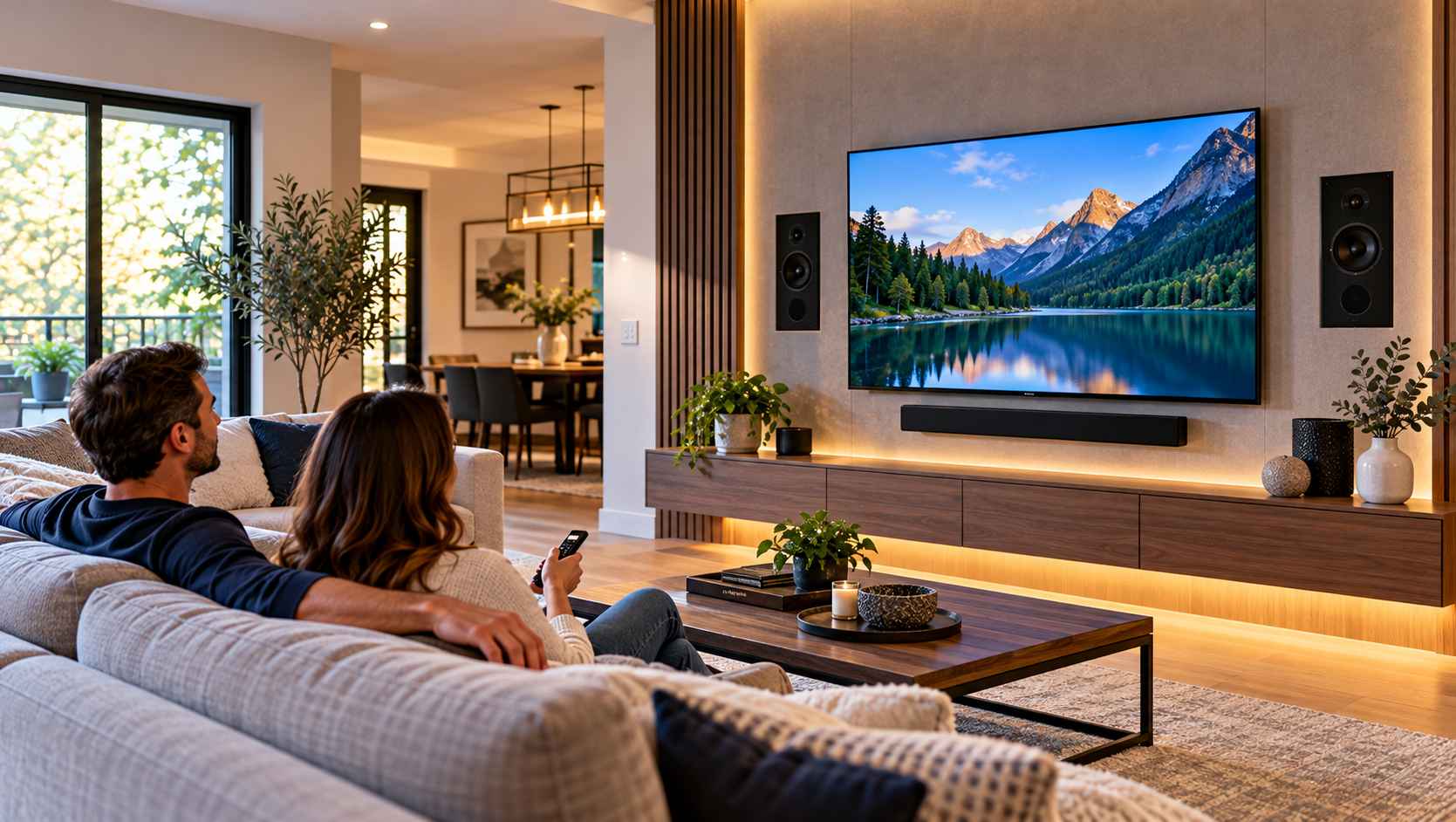
A television can be the centre of a room without making the room feel like a television room. Speakers can fill a space with music without becoming the first thing visitors notice. Even networking equipment, lighting controls, and other connected devices can be part of a comfortable home without creating a collection of visible wires and electronics.
The difference often comes down to planning.
When technology is added after furniture, finishes, lighting, and room layouts have already been decided, it can feel like an afterthought. When it is considered alongside the space from the beginning, it has a better chance of becoming part of the room rather than competing with it.
Start With How the Room Will Be Used
Before choosing equipment, think about what people actually do in the room.
A family room may need to accommodate television viewing, conversation, reading, gaming, and everyday family activities. A dedicated entertainment room may have a different priority, with seating arranged primarily around a screen and sound system.
These differences should influence technology decisions.
A large display may make sense in one room but overwhelm another. Multiple speakers may be useful in a space designed for music, while a simpler setup may be preferable where conversation is the main focus.
The best technology plan begins with the room’s purpose rather than a list of devices.
Consider TV Placement Before Arranging Furniture
Televisions are often one of the most visually dominant pieces of technology in a home, so placement deserves careful thought.
The screen should work with the room’s seating arrangement instead of forcing furniture into awkward positions.
Consider where people naturally sit, where windows are located, how much direct light reaches the screen, and whether the display will be comfortable to view from the main seating areas.
Wall mounting can create a cleaner appearance, but it should also be considered alongside power, signal connections, viewing height, and future access to equipment.
Planning these details before decorating or renovating can prevent the need to make compromises later.
Think About Cables Before They Become Visible
Cable management is one of the simplest ways to improve the appearance of a technology setup.
A room can have attractive furniture and carefully chosen electronics, yet still look cluttered if power and signal cables are visible across floors, walls, or furniture.
Where possible, cable routes should be considered before installation.
This is particularly important during renovations, when walls may already be open and opportunities exist to plan pathways more cleanly.
For existing rooms, there are still practical ways to organize cables. The goal is not necessarily to make every cable disappear, but to keep connections orderly, accessible, and visually unobtrusive.
Choose Audio Around the Room
Audio equipment should also be selected with the physical space in mind.
Traditional speakers can become design features when they are deliberately positioned, but there are also situations where homeowners prefer technology that blends more discreetly with the surroundings.
Room size, furniture placement, listening habits, and the desired sound experience all influence the approach.
A speaker arrangement designed for one seating area may not work equally well throughout an open-concept space.
For homeowners who want music in several areas of the house, distributed audio can also be considered. Instead of treating every room as an independent entertainment system, a whole-home approach can make it possible to think about audio as part of the overall living environment.
Make Technology Work With the Décor
Technology does not necessarily have to disappear to look good.
A well-designed display can complement a room. Speakers can be positioned thoughtfully. Equipment can be housed in furniture or dedicated locations rather than scattered across shelves.
The key is consistency.
If every device has its own remote, cable, power adapter, and visible accessory, the room can quickly feel cluttered.
Reducing unnecessary equipment and deciding where each component belongs can make the entire setup feel more intentional.
This is particularly useful in living spaces where technology shares attention with artwork, furniture, architectural features, and other decorative elements.
Plan Networking Alongside Entertainment
Modern home technology depends on more than screens and speakers.
Streaming, smart controls, connected appliances, security devices, computers, and other systems may all rely on a home’s network.
That means networking deserves consideration when planning an integrated technology setup.
The location of networking equipment can affect both performance and appearance. A collection of routers, switches, cables, and related equipment sitting in a visible living area is rarely ideal.
Where practical, equipment can be organized in a dedicated and accessible location.
Good planning also means considering how the home’s technology needs might change over time rather than designing only for the devices currently being used.
Coordinate Lighting With Entertainment
Lighting can significantly influence how a technology-focused room feels.
A television or projector may be easier to enjoy when lighting is positioned and controlled appropriately. At the same time, a room should remain comfortable when the screen is not being used.
This is where lighting controls can become part of a broader home-technology plan.
Instead of thinking of lighting, audio, and video as completely separate systems, homeowners can consider how they interact.
For example, an entertainment space might benefit from different lighting settings for watching a film, listening to music, entertaining guests, or simply relaxing.
The objective is not to add complexity for its own sake. It is to make common activities easier.
Consider Integration When Several Systems Need to Work Together
Once a home includes a display, multiple speakers, networking equipment, lighting controls, and other automated features, the individual components become less important than how they work together.
A system can look impressive on paper but still be frustrating if the homeowner has to manage several disconnected controls for ordinary activities.
When multiple technologies need to work together without dominating the room visually, homeowners may consider working with an audiovisual specialist such as Signature Audio Video to think through the overall setup.
The value of an integrated approach is not simply having more technology. It is making the technology easier to use and better suited to the space.
Plan Equipment Locations Early
Equipment location is easy to overlook during decorating.
Where will the receiver or other central components go? Where will networking equipment be located? Is there enough ventilation? Can the equipment be accessed if something needs to be changed?
These questions become more important as systems become more interconnected.
A cabinet may look like a convenient place for equipment, but it may not provide sufficient space, airflow, or access.
Planning these details before furniture is purchased or built-in cabinetry is installed can save considerable frustration.
Leave Room for Future Changes
Home technology changes quickly.
A room designed around one particular device may eventually need to accommodate a different display, additional networking equipment, new speakers, or another type of connected system.
That does not mean homeowners need to predict every future technology trend.
Instead, leave sensible flexibility where possible.
Accessible cable pathways, appropriate equipment space, and thoughtful power planning can make future changes easier without requiring a complete redesign of the room.
Flexibility is particularly valuable during renovations because decisions made at that stage can influence what is practical several years later.
Think About Everyday Usability
A technically impressive system is not necessarily a successful one if it is difficult to use.
Homeowners should think about who will actually operate the technology.
Can the television be used without navigating several complicated menus? Are the controls understandable? Can different members of the household use the system comfortably?
Simplicity often matters more than having the maximum number of features.
Technology should reduce friction in everyday life rather than create another complicated task.
Create a Comfortable Space, Not Just a Technology Display
The ultimate goal of integrating home technology is to improve the way a room is used.
A living room should still feel like a living room. A dining area should remain comfortable for conversation. A media room should not become uncomfortable simply because it contains more equipment.
This means technology decisions should be balanced with seating, lighting, storage, acoustics, circulation, and the overall character of the space.
The best setups often feel natural because the technology supports the room instead of dominating it.
Start Planning Before the Devices Arrive
The easiest time to think about technology placement is usually before installation.
Consider the purpose of each room, seating positions, display placement, speaker locations, cable routes, networking, lighting, equipment storage, and future flexibility.
This does not mean every homeowner needs a complicated technology plan.
Even a simple conversation about how the space will be used can reveal important decisions before furniture is moved or walls are finished.
By treating home technology as part of the overall design rather than something added at the very end, homeowners can create spaces that are easier to use, cleaner to look at, and better suited to everyday life.
Technology should ultimately disappear into the experience of the home. When screens, sound, connectivity, and controls are thoughtfully integrated, the result is not simply a room filled with electronics. It is a living space where technology works quietly in the background and supports the way people actually live.